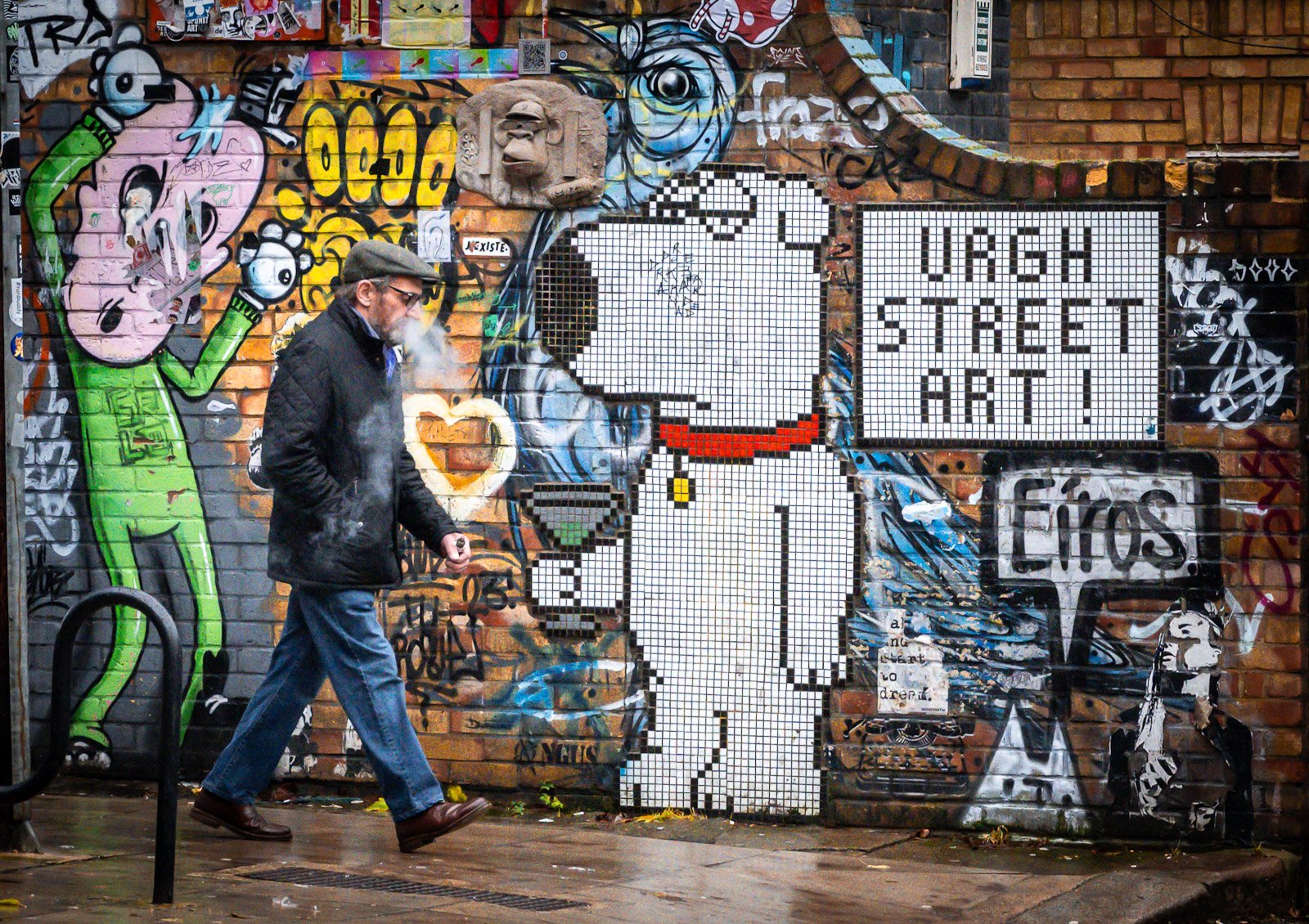
London’s Living Walls
Walk through almost any corner of London and you’ll find art where you least expect it: in tunnels, beneath bridges, on the backstreets where glass towers give way to brick and grit. Street art lives in these spaces, filling them with colour, story and defiance. Some call it vandalism, others call it life. I call it energy…real life in paint.
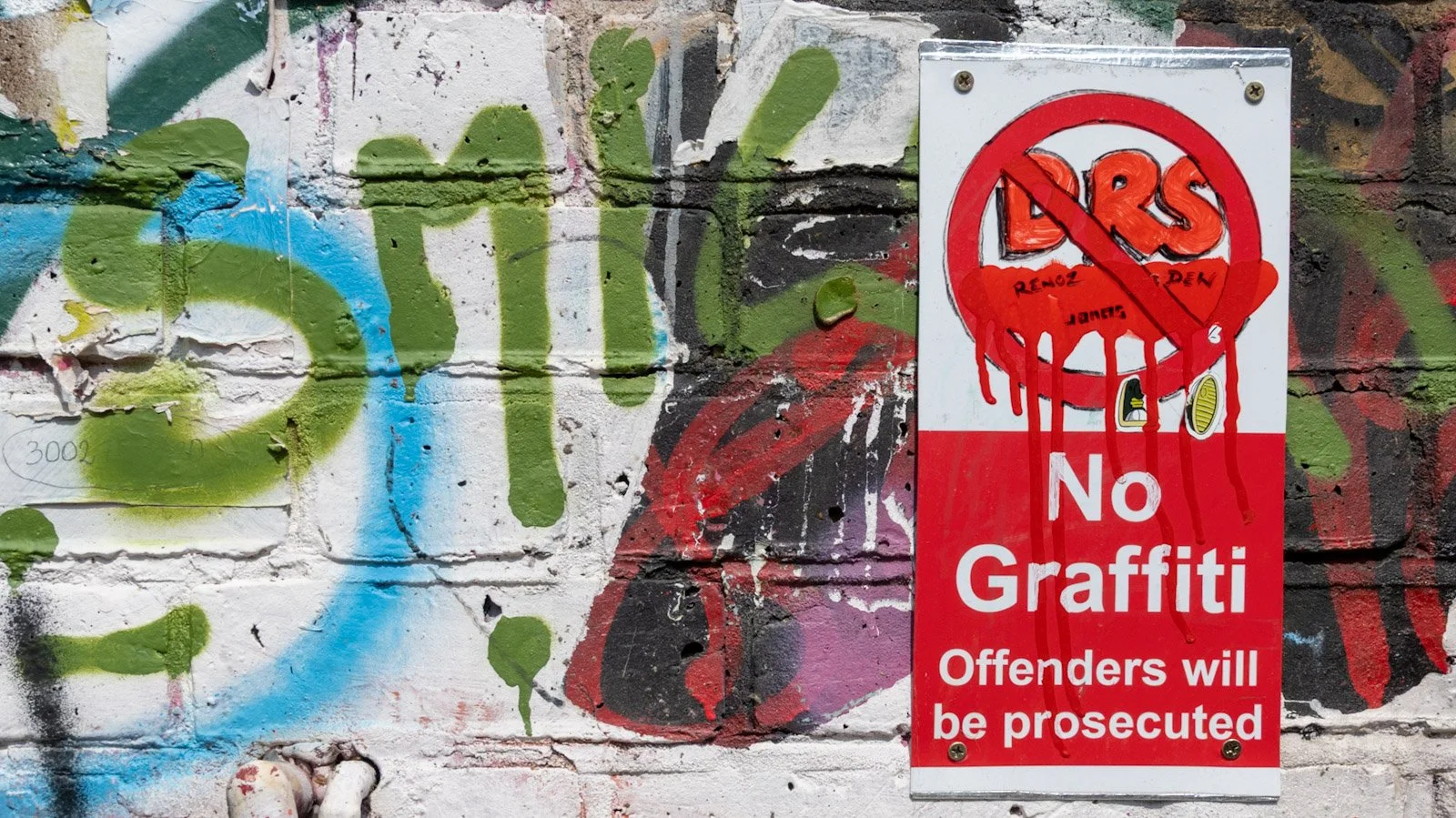
Leake Street Tunnel : The Beating Heart of London’s Urban Expression
Beneath Waterloo Station, Leake Street Tunnel hums with aerosol energy. The air smells faintly of paint, the walls shimmer in layers of colour and intent. Every inch is legal to paint, and that permission gives the place its pulse. Graffiti there is legal and street artists work freely, layering over one another’s creations, knowing nothing lasts long here. It’s a space in constant renewal, an urban gallery that never closes and never stays the same.
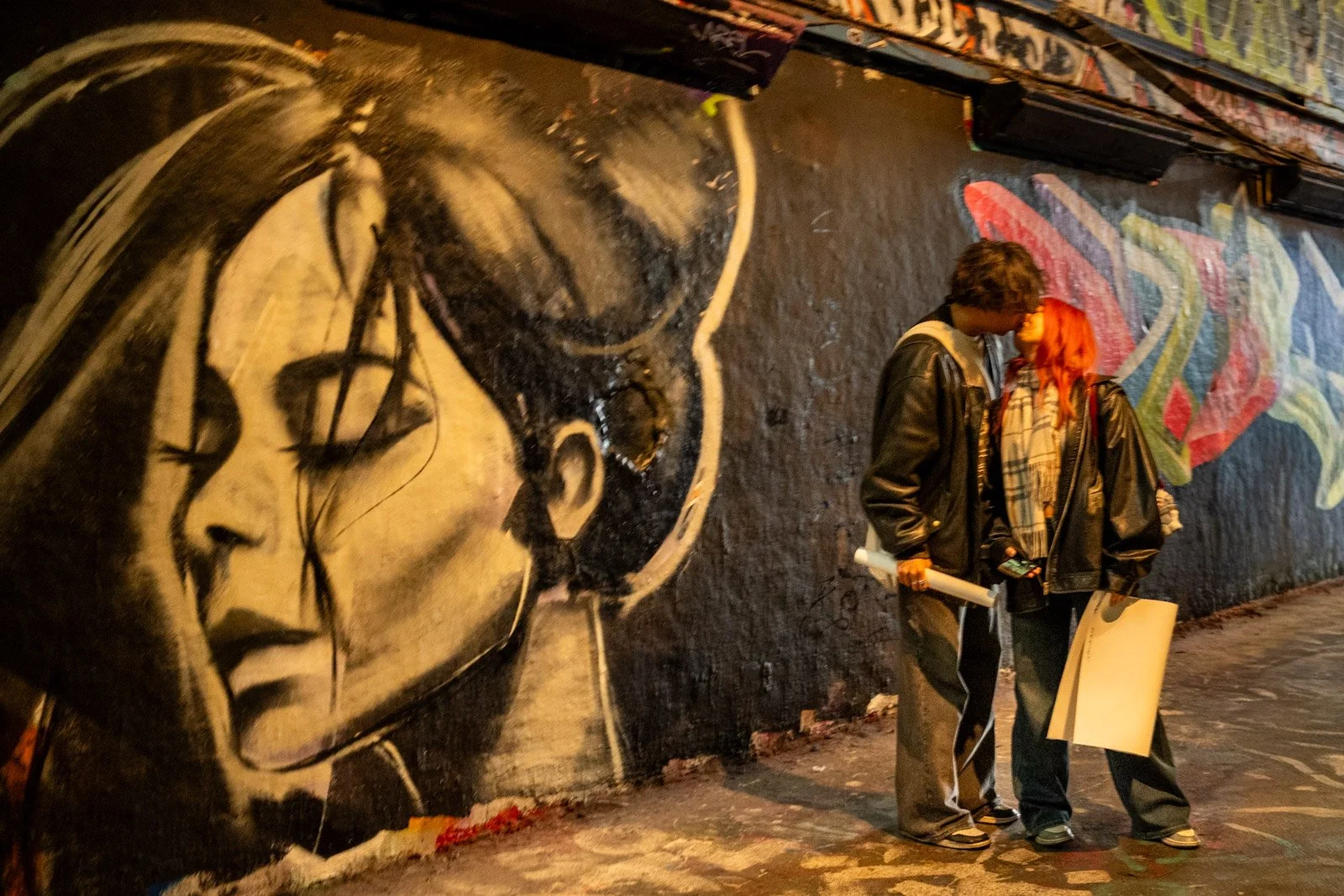
Photographing here is addictive. The light bounces unpredictably, reflecting pinks, oranges and neons into the shadows. Every corner is a ready-made backdrop. Faces, reflections, silhouettes, all change depending on which wall you turn towards. It’s the kind of place that makes you look harder, shoot quicker, think in colour even if you’re a monochrome photographer at heart…. if ever your lacking photographic inspiration this is the place to bring you back to life
Shoreditch and Brick Lane : Where Street Art Meets the Street Scene
Head east and the city changes again. In Shoreditch and around Brick Lane, the walls tell stories from around the world. Murals tower over market stalls, political pieces jostle with portraits, and doorways become tiny frames for humour and protest.
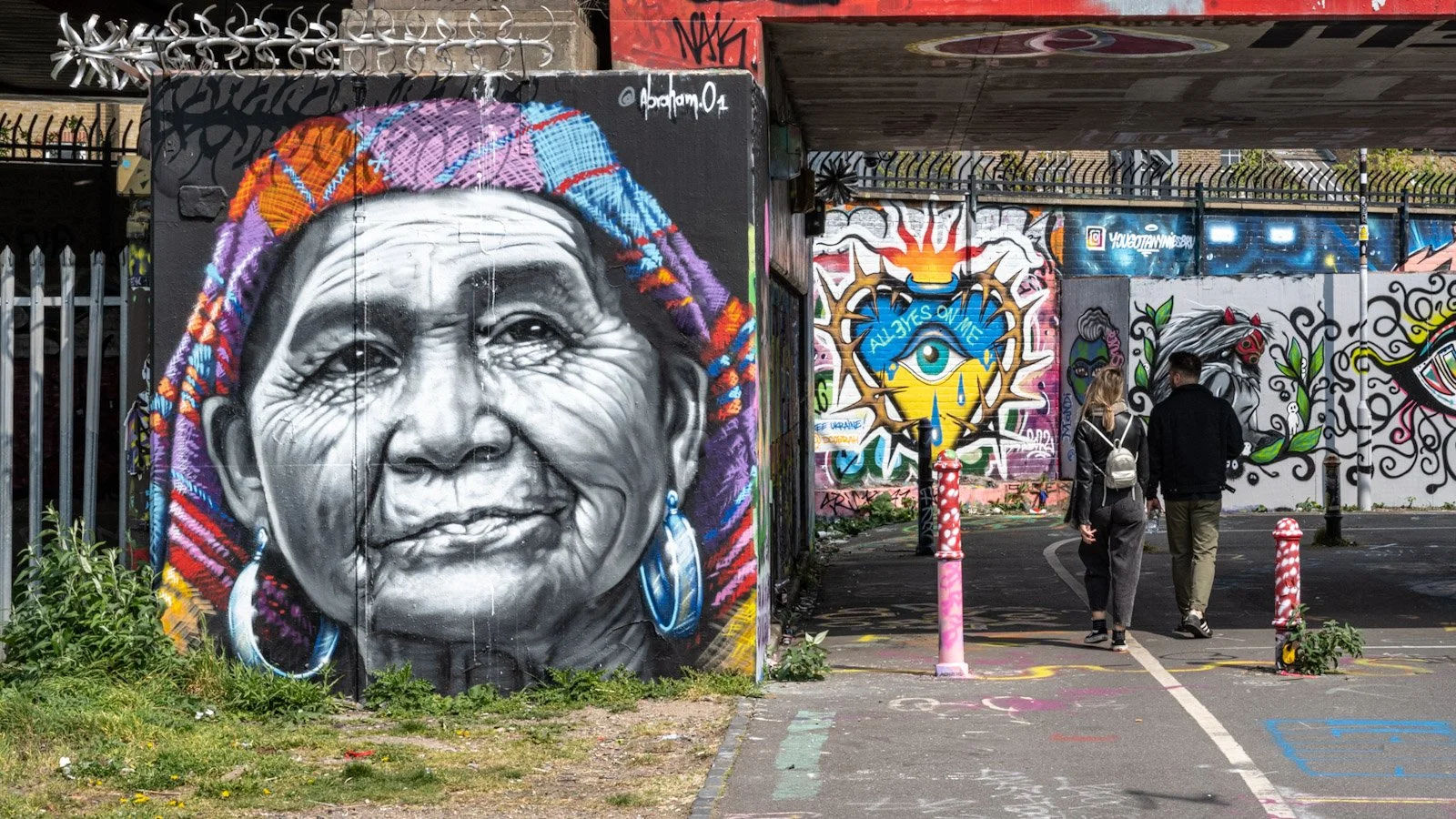
Here, art and street life blur. Locals walk by without a glance, while tourists stop to photograph every corner. It’s a visual dialogue; society talking back to itself, one stencil at a time.
As a photographer, the energy is unmatched. Street art changes the context of everything around it. A passer-by becomes part of a scene; a mundane wall becomes an explosion of colour. Photographing people against these backdrops transforms ordinary street moments into something cinematic. The walls frame the world’s stories.
Camden : Character in Every Corner
Camden wears its colour like a badge of pride. From the market walls to the canal bridges, street art sits alongside tattoo parlours, record shops and the smell of street food. There’s no subtlety here; it’s loud, confident and unapologetic…and it works.
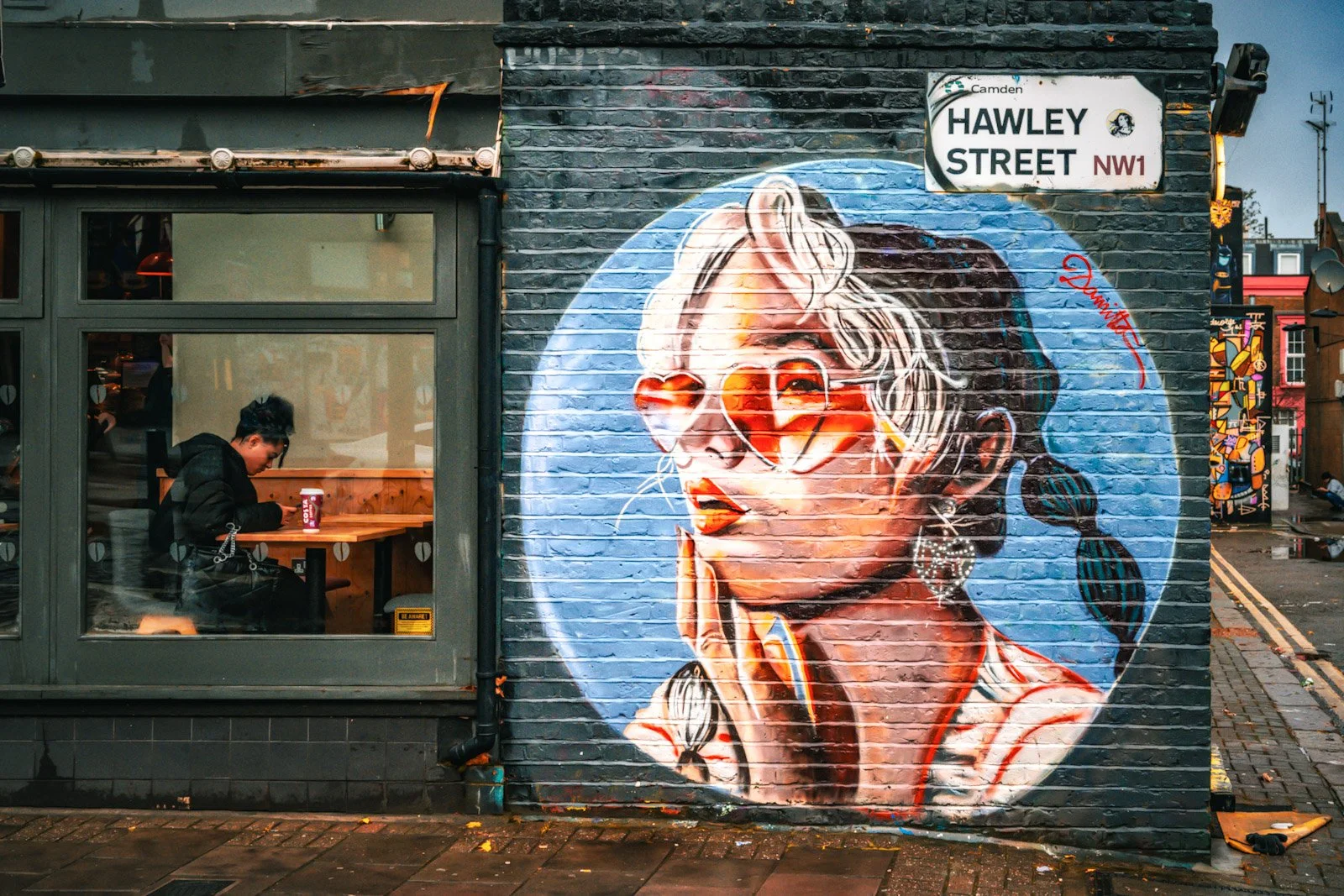
Camden’s art makes people look. It makes them smile. It gives life to the in-between spaces, the shutters, the side streets, the blank backs of buildings that might otherwise fade from view.
For photographers, Camden is a reminder that context matters. The art shapes how you compose, how you expose, what you notice. It injects life into the frame, it’s a shot of pure personality.
Street Art as Storytelling
What I love most about London’s street art is how real it feels. It’s unfiltered. It changes daily. It reflects what’s happening now, politics, anger, humour, love, rebellion all in equal measure. Photographing it feels like documenting a living conversation, a conversation that is not filtered or controlled by social media, or regulators.
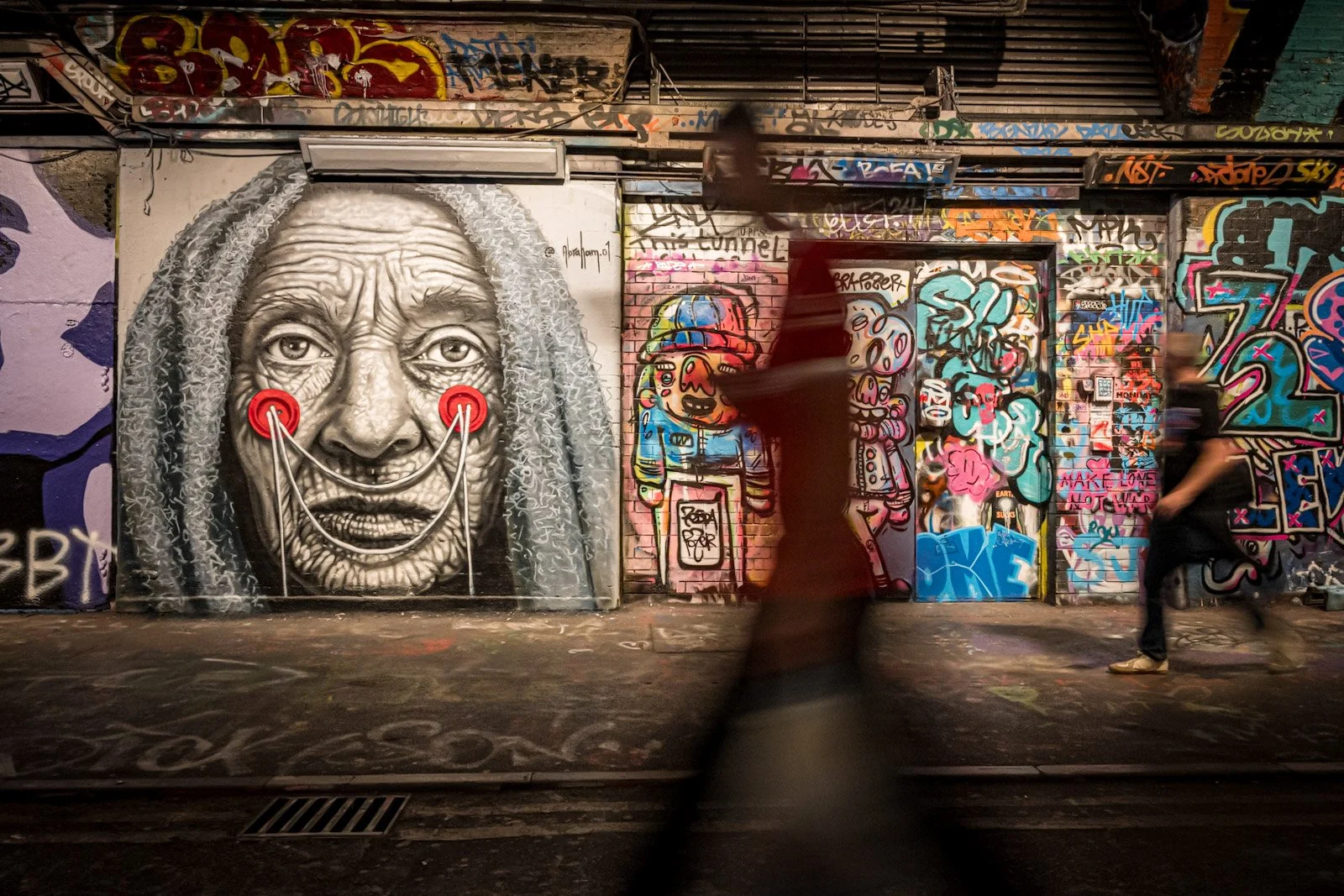
And when it’s done well, people don’t see vandalism. They see voice. Street art brings energy, hope and character to the city, and to the camera. It shifts how you see light and how you think about space. It makes you more observant. It makes you react. And it rewards you for noticing colour, even in a city that often hides behind grey.
Where to photograph the best Street Art and Graffiti in London
Leake Street Tunnel (Waterloo): London’s only legal graffiti tunnel, constantly changing. 10/10
Shoreditch and Brick Lane: Huge variety, from murals to micro-art; the beating heart of East London creativity. 9/10
Camden: Colour, music and rebellion rolled into one, ideal for characterful street scenes. 8/10
Southbank Undercroft: Skaters, graffiti and movement – raw and kinetic. 7/10
Closing Thought
Street art isn’t about permanence. It’s about fast, bright, transient and unregulated expression. Every frame you take might capture something that’s gone tomorrow. That’s what makes photographing it so much fun: it’s never finished it’s never the same, and if your lucky it’s impossible to replicate, so while the art is someone elses, the image is unique to you…